
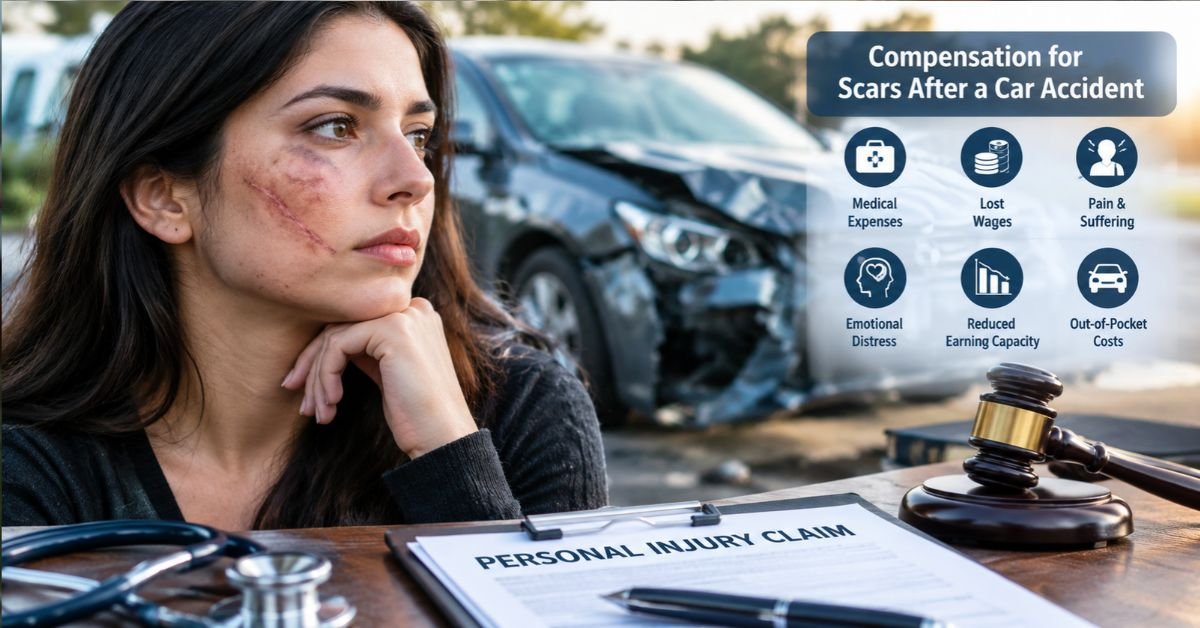
A car crash can leave marks that never fully fade. For many survivors, permanent scarring becomes a daily reminder of the collision and shapes how they feel about their appearance, relationships, and future.
The good news is that car accident scars can qualify for compensation through a personal injury claim. The value depends on how the injury happened, what type of scar resulted, and how it affects everyday life.
Damages Available for Scarring Injuries
Scarring claims can include both economic and non-economic damages. The main categories are:
- Medical expenses: Emergency care, reconstructive surgery, dermatology treatments, physical therapy, and counseling related to the injury.
- Lost wages: Income missed during hospital stays, recovery, and follow-up visits.
- Reduced earning capacity: Career setbacks caused by permanent disfigurement, such as lost promotions or the need to retrain.
- Pain and suffering: The physical pain and emotional distress caused by the injury.
- Loss of enjoyment of life: The impact on hobbies, social activities, and relationships.
- Out-of-pocket costs: Travel to specialists, concealing products, or specialized clothing.
What Affects the Value of a Scar Claim
No two scar claims are identical. Several factors help determine what a fair settlement looks like.
Age and Visibility
Younger victims may live with a scar for decades, which can support a higher award for pain and suffering. Scars on the face, neck, or hands also tend to carry more weight than those in less visible areas.
Severity and Ongoing Treatment
Large scars that cause tightness, itching, or restricted movement generally justify greater compensation. Records of past surgeries, current therapy, and projected future procedures all add to the total.
Emotional and Financial Effects
Therapy notes and psychiatric evaluations can document anxiety, depression, or PTSD tied to disfigurement. If scarring limits job prospects or forces a career change, that loss can support a claim for reduced earning capacity.
How Scarring Happens in Car Crashes
Scars can form on nearly any part of the body, but some crash scenarios are especially risky. Striking a steering wheel, dashboard, or window can cause deep facial cuts that require surgery. Shattered glass and twisted metal often leave long, jagged scars.
Vehicle fires and hot engine parts can cause burns that lead to contracture scarring. Facial scars are often the hardest to live with because they affect both function and self-image.
How Scar Tissue Develops
After a serious injury, the body floods the wound with collagen to close and repair the skin. This fast repair produces tissue that is thicker and less flexible than normal skin.
Scar tissue also lacks sweat glands and hair follicles, and it does not stretch like healthy skin. That can lead to limited mobility, changes in sensation, and ongoing discomfort.
Common Types of Scars After a Collision
Identifying the scar type matters for both treatment and claim evaluation.
- Keloid scars: Thick, raised scars that grow past the edges of the original wound and may itch or hurt.
- Hypertrophic scars: Raised and red, but contained within the original wound area.
- Contracture scars: Often caused by deep burns, these can tighten the skin and restrict movement near a joint.
- Pigmentation changes: Areas that turn darker or lighter than the surrounding skin.
The Lasting Physical and Emotional Impact
Permanent scarring affects more than appearance. Survivors may deal with chronic pain, limited mobility, or numbness at the site.
Many also struggle with anxiety, depression, or post-traumatic stress, and some avoid social events or feel self-conscious at work. These effects can be included in a claim as non-economic damages.
Steps to Protect Your Claim
A few early actions can make a big difference:
- Get medical care promptly so your records clearly connect the injury to the crash.
- Document every treatment and keep notes on how the scar affects daily life.
- Save photos of the accident scene and vehicle damage.
- Avoid giving recorded statements to insurers before speaking with an attorney.
Keep filing deadlines in mind as well. Missing the statute of limitations can bar your claim entirely, no matter how serious the injury.
How an Attorney Can Strengthen Your Case
Insurance companies often undervalue scarring claims by downplaying both the physical and psychological harm. An experienced car accident attorney can counter that approach by investigating the crash, working with medical experts, and calculating current and future damages.
A skilled legal team can also negotiate with adjusters and, if needed, take the case to court. That lets you focus on healing while your attorney manages the legal details.
If you are living with permanent scarring after a crash, the right local personal injury firm can make a real difference in the outcome of your claim.
