
We use artificial intelligence every day, often without realising it. Kids see it in games, search engines, chatbots, and school tools. But how much do they really know about AI?
Parents who want to introduce their children to AI need to choose the right course. Some programs teach kids how to use AI tools. Others explain coding, data, and how computers learn. Top-rated platforms break down machine learning and artificial intelligence into digestible concepts.
The best AI course for kids should match your child’s age, include practical projects, and teach real AI concepts. It should also help children develop problem-solving skills and understand how to use technology responsibly.
Table of Contents
Age-Appropriate AI Curriculum for Kids
Hands-On AI Projects and Activities
Machine Learning and Essential Skills
Experienced Instructors and Safe AI Classes
AI Literacy and Responsible Technology Use
Age-Appropriate AI Curriculum for Kids
The AI course should match your child’s experience, age, and interests. A six-year-old needs different lessons from a teenager.
Younger kids often learn best through easy explanations, games, and activities. Older students may be ready for coding, data, and more advanced topics.
For example:
- Ages 6–10: AI curriculum for grades 3-5 focuses on digital fluency. Simple logic, patterns, and interactive games can introduce AI.
- Middle school: Students can explore coding, data, and how computers make predictions.
- High school: Older learners may be ready for text-based programming and advanced applications.
Parents should ask:
- What age is the artificial intelligence course designed for?
- Does my child need coding experience?
- Are the lessons suitable for beginners?
- What will my child learn?
Age-appropriate lessons help children stay interested and avoid feeling overwhelmed.
Hands-On AI Projects and Activities
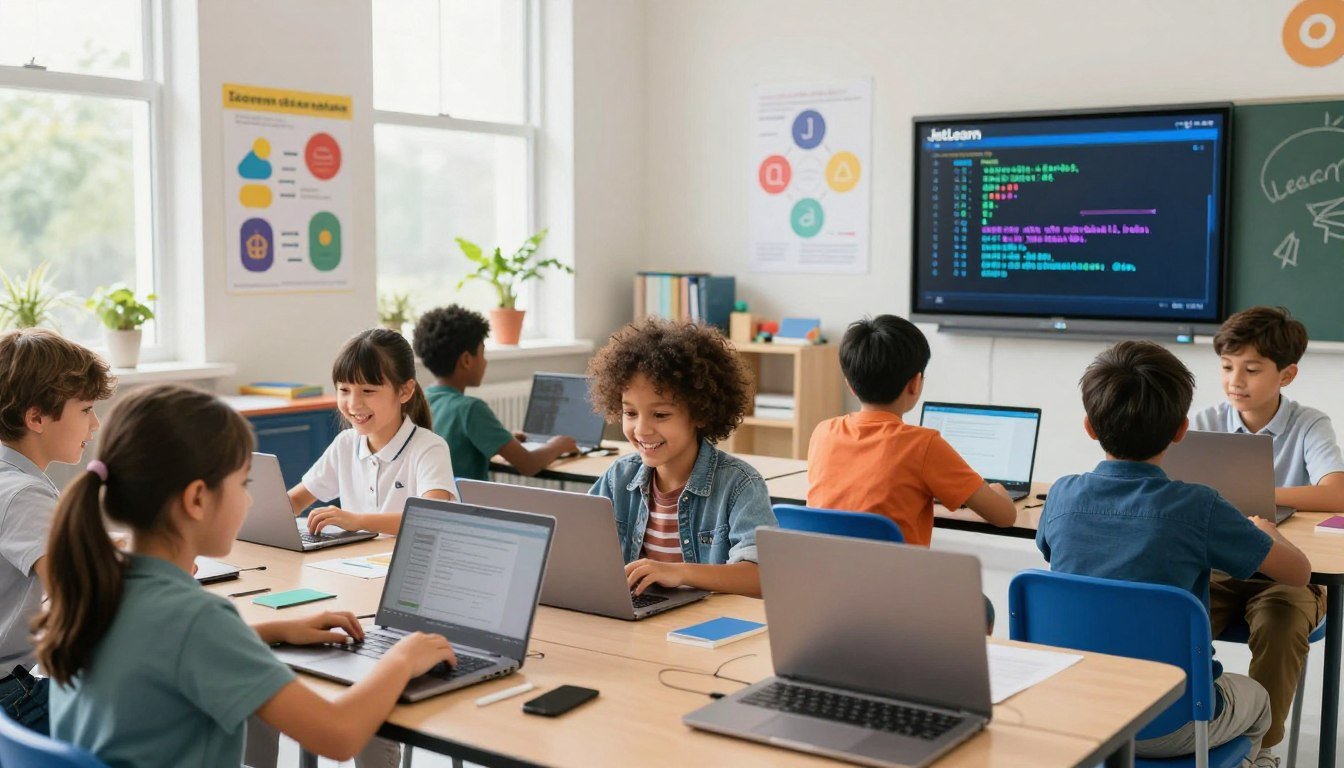
Children learn better when they can try things themselves. A course that only includes videos and explanations may not keep them interested.
Look for hands-on projects that allow kids to build, test, and improve something.
Examples include:
- A simple image recognition activity.
- A chatbot project.
- A game with computer-controlled characters.
- An experiment showing how a model learns from data.
- A creative project using an AI assistant.
These activities help children connect lessons to real situations.
For example, a teacher might explain that machine learning uses data to find patterns. A child could then try sorting pictures based on features. This makes the course lesson easier to understand.
Machine Learning and Essential Skills
A strong course should teach more than how to use AI-powered tools.
Children should learn how computers process information, follow instructions, and solve problems. These lessons can support their wider computer science education.
Important topics may include:
- Machine learning: How computers learn patterns from data.
- Computer vision: How computers process information in images.
- Natural language processing: How computers work with human language.
- Generative AI: How systems create content such as text or images.
- AI ethics: Why privacy, fairness, and responsible use matter.
The instructor should explain these topics in simple language.
Experienced Instructors and Safe AI Classes
A good teacher can make every difficult lesson easier to understand.
Look for an AI course for kids that has instructors who know how to teach them. They should explain technical ideas clearly and support students when projects do not work.
Parents should check whether the course offers:
- Experienced instructors.
- Clear learning goals.
- Support during lessons.
- Age-appropriate teaching materials.
- A safe and supervised learning environment.
Ask how the classes are delivered. Some children prefer live lessons with a teacher. Others enjoy self-guided activities.
Software Academy runs its programs both ways. Software Academy offers AI and Machine Learning courses for kids who want to explore technology and build new skills.
Software Academy’s AI & Machine Learning course is designed for children aged 9+. Term-time AI classes follow a structured weekly schedule, while private tuition offers more flexible scheduling. That kind of flexibility matters more than most parents expect until they’re actually trying to fit a class into a busy week.
AI Literacy and Responsible Technology Use
A good AI education program should explain how technology affects people.
Children need to understand that AI systems can make mistakes. They should also learn that sharing personal information with AI tools may raise privacy concerns.
Ethics should be part of the lessons.
For example, an instructor might discuss:
- Why personal information should be protected.
- How unfair data can affect AI results.
- Why AI-generated content needs checking.
- How to use technology respectfully.
- Why do people remain responsible for their decisions?
These discussions help children understand the limits of artificial intelligence. AI literacy means knowing how technology works, what it can do, and when to question its results.
Teaching responsible technology use helps children make better decisions as they grow.
FAQs
At what age can kids start with AI?
Software Academy’s AI & Machine Learning course is available from the age of 9. Courses for kids typically cover core AI topics like machine learning basics and ethics.
Does my child need coding experience?
No. Many beginner programs, like Software Academy, introduce coding and AI concepts step by step.
What should they learn with AI for kids?
Kids should learn basic AI concepts, data, coding, critical thinking skills, and responsible use of technology. Practical projects can help them understand these ideas.
How AI Works?
When you ask AI a question, it processes your words, uses patterns learned during training, and generates a response. AI literacy is crucial for equitable access to technology education.
Look for a program that matches their age, includes practical projects, and teaches real AI concepts. Experienced instructors and a safe learning environment also matter.
Choose a course that makes learning AI practical, engaging, and easy to understand.
