
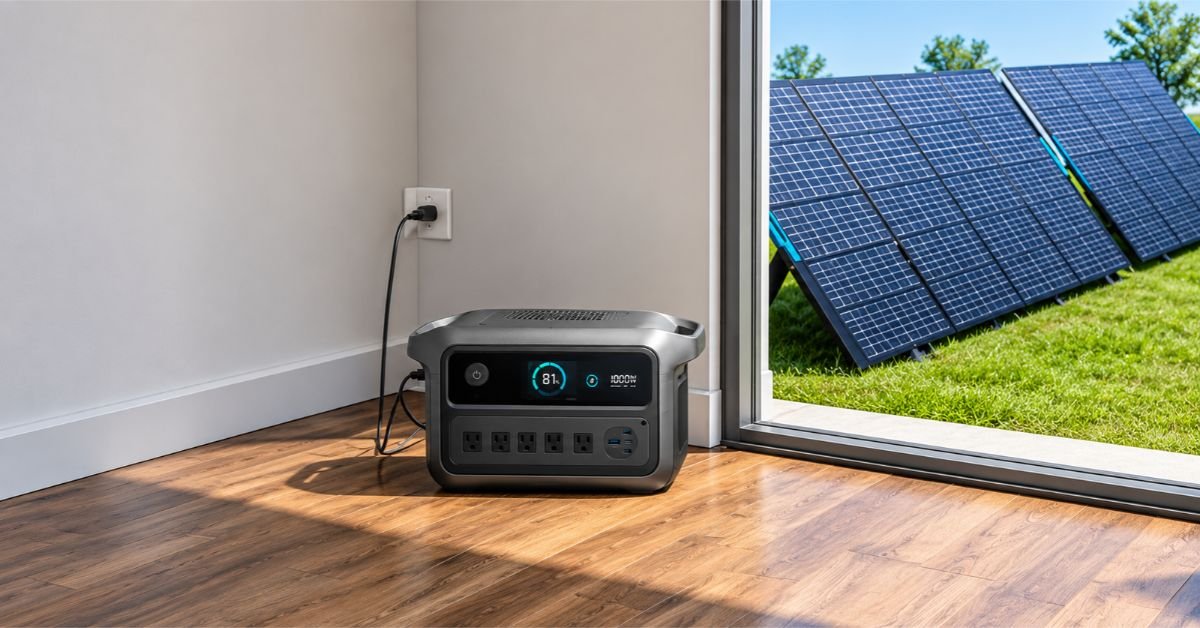
A wet afternoon rarely kills a solar setup; a wet connection usually does. Water gets in at the joints, the plugs and the seams long before it gets into a sealed case. The difference comes down to three decisions: the rating, the position and where the cable runs. None of them needs a dry day, and all of them are made before the first drop lands. Getting it right costs a dry bag; getting it wrong costs a second unit in year two, and the bag is cheaper. The aim here is to show what a rain rating covers, where water gets in and how to set up for a wet week.
Water Resistance Ratings
IP Rating Basics
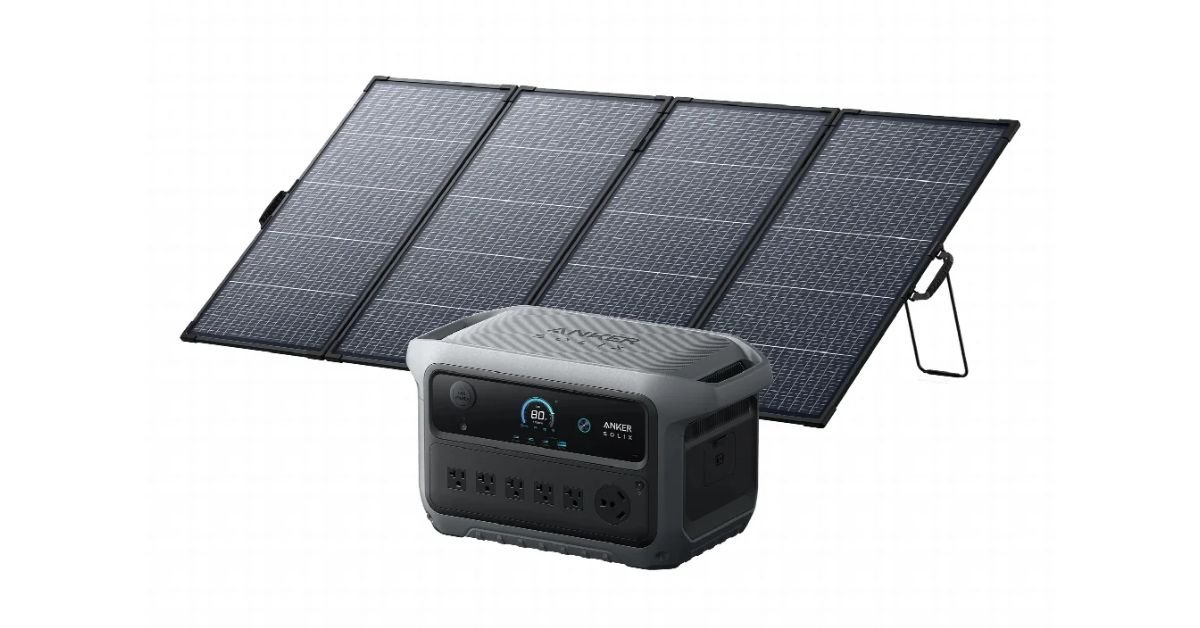
The first digit is dust, the second is water, and the second is the one that matters here. IPX4 survives splashes from any direction, IPX5 handles a jet, and IP67 tolerates temporary immersion. The 400W panel that ships with the Anker SOLIX C2000 Gen 2 carries that top grade, so rain on the glass is a non-event, and its four tilt settings (30, 40, 50 and 80 degrees) make the most of the light between showers. A station rated IPX4 is fine under shelter in rain and wrong on open ground in a downpour. Read the rating on the unit itself rather than the marketing page, and read the second digit only, because the first one tells you nothing about weather.
What Ratings Do Not Cover
Ratings describe fresh water and a test duration rather than salt, mud or a connector left face-up in a puddle, so treat the number as a floor rather than a ceiling. What sits outside the test is small: the ports, the seams and the plugs, all of which you can keep dry in a minute. That gap is why the best solar generator for wet weather is judged by its ports as well as its badge, since a sealed body with the flap closed stays sealed. A gasket that has spent three summers in the sun deserves an inspection rather than a replacement, and most of them pass. If water does reach a port, dry it thoroughly before the next charge, because a wet connection under load is the worst case.
Placement in Wet Weather
Sheltered Setup Positions
Put the unit under something solid, such as a porch, an awning or the lee side of a vehicle, and raise it off the ground on a crate or a mat. Water arrives from below as often as from above. Keep the display facing you and the vents clear, because a unit wrapped in a bag to keep rain off will overheat while it works. The ideal spot is dry, ventilated and close enough that you can see the screen without stepping into the rain. A simple crate and a piece of board will keep a unit dry through a week of rain, and cost less than a replacement. Wind-driven rain reaches places a straight-down shower never touches, so check the sides as well as the top.
Cable and Connector Covering
Run cables with a drip loop so water runs off rather than into the plug, and keep every connection off the ground. A short length of tape or a purpose-made boot is cheap insurance. Check the plugs at the end of the day, because a connector that has been wet and warm is where corrosion starts. Once corrosion begins, the resistance rises and the charge rate falls, and the fault looks like a failing panel rather than a wet joint. Check the cable jacket as well as the plug, because a cracked jacket lets water travel to the connection from a metre away. A dry bag for the connectors costs less than a new cable and takes no space in the case.
When Rain Is Not the Whole Story
Thunder Is a Different Problem
Rain and thunder are separate problems, and the rating on the box answers only the first. A panel is a large conductor on a frame, and the safest habit in a storm is distance: unplug the array before the cell arrives, take a portable panel indoors, and keep off the roof until the thunder has been quiet for half an hour. A permanently mounted array with a proper earth is a different calculation, and that is a question for an electrician rather than a product page. Nothing about a wet day requires you to test a connection while the sky is flashing.
The Check After It Stops
After the rain the array is usually fine, and what needs looking at is everything the water moved. Wipe the glass with a soft cloth rather than a scraper, since grit under a blade scratches the coating that does the work. Check the frame and the brackets for movement, clear the drain holes of leaf litter, and look at the ground beneath a ground mount for scouring, because a soaked footing is where a panel starts to lean. Then read the output against yesterday at the same hour, which is the fastest test there is.
Conclusion
Rain rarely ends the session; it changes where the gear sits and how fast it charges. Get the unit under cover, keep the joints dry and expect less from the panels, and a wet day costs time rather than equipment. The forecast decides the plan, not the purchase. A towel, a dry box and ten minutes of patience cover the whole of it. A raised cable and a covered unit handle most of what a wet week brings. The equipment is the smaller half of the answer, because the weather decides the other half. That is the whole rule.
