
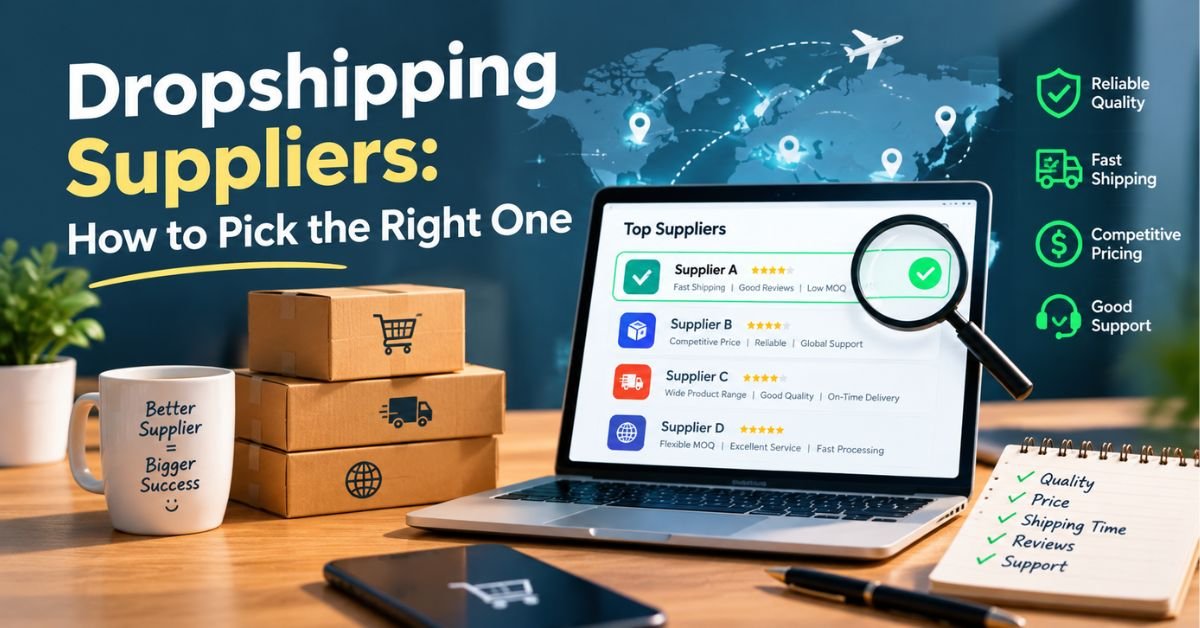
Starting an online store used to mean renting a warehouse, buying inventory in bulk, and hoping the products would sell. Dropshipping changed that. Sellers can now list products, take orders, and let a supplier handle storage, packing, and shipping. For retailers who want to test ideas without heavy upfront costs, it remains one of the most accessible ways into e-commerce.
But the model is only as strong as the partners behind it. Your customers never see your supplier, yet they judge your store by every package that arrives at their door. Dropshipping suppliers sit at the center of that experience, which is why platforms like Dropshipping suppliers that connect US retailers with vetted suppliers and product catalogs have become a practical starting point for many sellers. Choosing the right supplier early can save you months of refunds, delays, and lost trust, so it pays to understand what separates a dependable partner from a risky one.
This guide covers how dropshipping works, why supplier choice matters so much, what to look for, how to connect your store, and how to grow once the basics are running.
How Dropshipping Works in Practice
In a traditional retail model, you buy stock, store it, and ship each order yourself. In dropshipping, you never hold inventory. The flow looks like this:
- You list a supplier’s product in your online store at a price you set.
- A customer places an order and pays you.
- You pass the order to your supplier, paying the wholesale price.
- The supplier packs and ships the item directly to your customer.
- You keep the difference between your retail price and the wholesale cost.
Because you only purchase a product after a customer has paid for it, you avoid the risk of unsold stock sitting on shelves. Your main jobs become choosing products, marketing your store, and handling customer service.
Why the Supplier Matters More Than the Storefront
New sellers often spend weeks polishing a store design and only a few hours on supplier research. That balance is usually backwards. A clean website can attract a first order, but a supplier determines whether there is a second one.
Consider what your supplier controls:
- Shipping speed. Customers in the US have grown used to fast delivery. A supplier that takes a week to ship can generate complaints even when the product is good.
- Product quality. If the item does not match its listing, you handle the return and the bad review.
- Stock accuracy. Selling something that is out of stock creates cancellations and frustration.
- Packaging and presentation. The unboxing is often the only physical touchpoint between your brand and the buyer.
Since you carry the customer relationship, you also carry the consequences of any supplier mistake. Treat supplier selection as a business decision, not an afterthought.
What to Look for in a Dropshipping Supplier
Reliable Fulfillment and Clear Shipping Times
Ask for realistic processing and delivery times, and check whether they apply to the regions where you plan to sell. Suppliers that operate within the United States can often deliver faster and with fewer customs complications than overseas sources, which matters when your customers expect predictable timelines.
Transparent Pricing
Understand exactly what you pay per item, including any shipping fees, handling charges, or minimums. Your margin depends on these numbers, and hidden costs can quietly erase profit on lower-priced products. Build a simple spreadsheet that includes product cost, shipping, payment processing fees, and advertising costs before you commit to any item.
Product Variety and Category Depth
A wide catalog gives you room to test niches, add complementary products, and adjust when a trend fades. A supplier network with many product categories is more flexible than a single-product source, particularly if you are still discovering what your audience wants.
Accurate Inventory Data
Inventory that updates automatically helps you avoid overselling. If your supplier’s stock counts sync with your store, you spend less time correcting listings and apologizing to customers.
Responsive Communication
Test this before you rely on it. Send a question about a product or policy and see how quickly and clearly the supplier replies. A partner who is slow to answer during onboarding is unlikely to speed up when a shipment goes missing.
Straightforward Return Policies
Returns are a normal part of retail. Know who pays for return shipping, how refunds are handled, and what happens with damaged goods. Write your own store policy to match, so your promises to customers never exceed what your supplier will honor.
Connecting Your Store to Suppliers
The technical side of dropshipping is far simpler than it once was. Most modern platforms are designed to connect with popular storefronts so that products, prices, and orders move between systems with minimal manual work. When evaluating any supplier or platform, check the following:
- Platform compatibility. Confirm that it works with the store builder you use or plan to use, such as Shopify, WooCommerce, BigCommerce, or a marketplace account.
- Product imports. Look for tools that bring in titles, descriptions, images, and pricing so you are not copying details by hand.
- Order routing. Ideally, new orders reach the supplier automatically or with a single click, reducing errors and delays.
- Tracking updates. Tracking numbers should flow back to your store so customers are notified without you chasing information.
- Inventory syncing. Stock levels should refresh regularly to keep your listings accurate.
Before going live, place a few test orders yourself. Walk through the entire journey as a customer would, from checkout to delivery. This is the fastest way to uncover slow shipping, weak packaging, or gaps in communication before real buyers experience them.
SEE MORE: SEO Companies 2025 Aelftech.com: Full Review
Building a Store That Stands Out
One common criticism of dropshipping is that many stores look identical because they sell the same products in the same way. You can avoid that trap by focusing on what is within your control.
Choose a Focused Niche
A store that serves a specific audience, such as home fitness, pet owners, or small-space living, is easier to market than a general store with random items. Focus lets you write better product descriptions, create relevant content, and build a recognizable brand.
Write Your Own Product Content
Supplier descriptions are a starting point, not a finished product. Rewrite them in your own voice, highlight benefits that matter to your audience, and add practical details like sizing, care instructions, or use cases. This improves the customer experience and also helps your pages stand apart in search results.
Invest in Customer Service
Because you do not handle the goods, service is where you can differentiate. Answer questions quickly, communicate proactively when orders are delayed, and resolve problems without making customers argue for a fix. Small stores that treat buyers well often earn repeat business that larger competitors struggle to match.
Use Content and Search to Attract Buyers
Paid advertising can bring quick traffic, but it also raises your costs. Blog posts, buying guides, and helpful product pages can bring in shoppers through search over time. Write for the questions your customers are actually asking, and keep your content honest and specific.
Managing Margins and Risk
Dropshipping margins are often thinner than people expect, so careful pricing is essential. Account for these costs before setting prices:
- Wholesale product cost
- Shipping charges
- Payment processing fees
- Advertising spend
- Software subscriptions and other tools
- Refunds and returns
If a product does not leave room for all of these, it is probably not worth listing. Many sellers find that higher-value items or products with clear customer demand give them more breathing room than very cheap goods.
Risk management matters too. Avoid depending on a single supplier for your entire catalog. If one partner runs out of stock or changes terms, you want alternatives ready. Keep records of supplier policies and communications, and review performance regularly by tracking late deliveries, complaint rates, and refund requests.
Advice for Suppliers Who Want to Reach More Retailers
Dropshipping is not only for retailers. Suppliers and brands can use it as a sales channel that reaches many independent stores at once, without building a customer base from scratch. If you are a supplier, a few habits make you far more attractive to sellers:
- Provide clear, high-quality product images and accurate descriptions.
- Keep inventory data current so retailers do not sell products you cannot ship.
- Offer consistent processing times and communicate any delays promptly.
- Publish straightforward policies on returns, damages, and pricing.
- Make onboarding simple, with easy access to product data and order tools.
Retailers remember the partners that make their work easier, and they tend to give those suppliers more of their volume.
Scaling Once You Have a Foundation
When your first products are selling reliably, you can start expanding in a measured way. Add complementary items that match your existing audience rather than jumping to unrelated categories. Study your customer data to see which products drive repeat purchases, and consider bundles that increase average order value. Test new marketing channels one at a time so you know what actually works.
As volume grows, revisit your supplier relationships. Ask about better pricing at higher order counts, faster processing options, or expanded catalogs. Strong partnerships often improve as both sides see steady business.
Common Mistakes to Avoid
- Skipping test orders. You cannot judge quality or speed from a product page alone.
- Ignoring shipping times. Delays create refund requests and negative reviews.
- Chasing trends without demand. A product going viral is not a business plan.
- Underpricing. Forgetting fees and advertising costs leads to sales that lose money.
- Copying supplier text unchanged. It weakens your brand and your search visibility.
- Neglecting policies. Unclear shipping and return terms invite disputes.
Final Thoughts
Dropshipping lowers the barrier to starting an online business, but it does not remove the need for good judgment. The retailers who succeed treat it like a real business: they research their partners, price with care, test the customer journey, and put effort into service and content. The suppliers behind your products shape your reputation, so choose them deliberately and monitor them consistently.
Begin with a focused niche, verify shipping and quality with test orders, and build from there. With dependable partners and a store designed around your customers’ needs, dropshipping can be a flexible way to grow an online presence without the burden of managing inventory.
FAQs
1. Is dropshipping dead in 2026?
No, but the easy version is. Selling generic products from overseas with long shipping times and thin margins works far less well now. Stores with a clear niche, faster shipping (often US-based suppliers), and real branding and customer service still operate profitably.
2. What is the most reliable dropshipping supplier?
No single supplier is the most reliable for everyone. Reliability depends on your niche, shipping region, and product category. Look for accurate inventory syncing, fast processing, clear return policies, and quick communication, then place test orders before committing. Platforms with vetted US suppliers, such as TopDawg, can make this vetting easier.
3. Who is the richest dropshipper?
There is no verified ranking. Most dropshippers’ earnings are self-reported and often exaggerated for marketing. Be skeptical of anyone advertising a specific “richest dropshipper” claim, especially when they’re also selling a course.
4. How many dropshippers fail?
Nobody has reliable, independently verified data. Failure is widely acknowledged to be common, though, mainly because of thin margins, ad costs, poor product choices, and unreliable suppliers. Treat any exact percentage you see online with caution.
5. What has replaced dropshipping?
Nothing has fully replaced it. It has evolved into related models: print-on-demand, private-label products with a supplier or 3PL, wholesale and hybrid inventory (stocking bestsellers and dropshipping the rest), and subscription or brand-led stores.
