
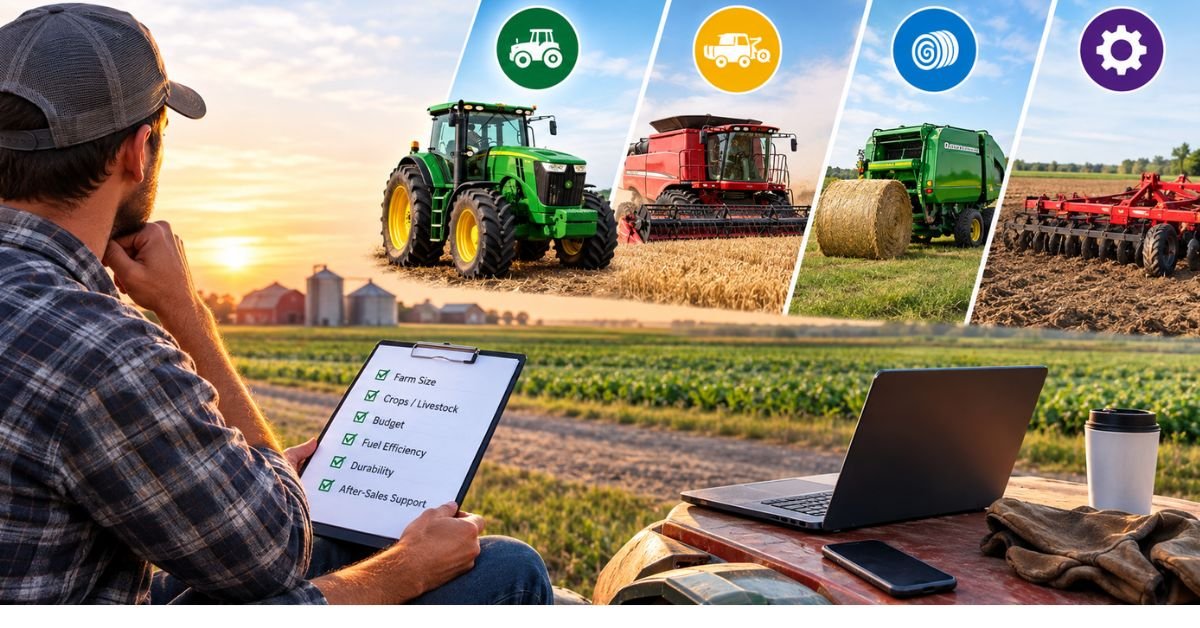
A tractor can outlast two or three generations of owners. A harvester can make or break a season in a single wet week. Get a purchase wrong, whether it’s a machine too big for your fields, an implement that won’t pair with your tractor, or equipment nobody nearby can repair, and you’ll feel it for years.
This guide walks through the main categories of modern farm equipment: tractors, seeders, sprayers, harvesters, and drones. It sticks to practical questions rather than brand claims. The same fundamentals apply whether you’re buying locally or looking further afield, for example at a Gengjia Agri, China Farm Equipment manufacturer match the machine to your land, crops, labor, and budget, then make sure support will still exist once the sale is done.
Start With Your Farm, Not the Machine
Before you look at a single spec sheet, describe your operation honestly. What suits a 500-hectare grain farm will be wrong for a 5-hectare vegetable plot, and the reverse is just as true.
A few things are worth pinning down first:
- Field size and shape. Big, regular fields favor wide implements and stronger tractors. Small or awkward plots reward compact machines that can turn easily.
- Terrain and soil. Heavy clay, sand, slopes, and paddy fields all ask different things of traction, weight, and tires or tracks.
- Crop mix. A farm that grows wheat, corn, rice, and vegetables needs more flexibility than one that grows a single crop.
- Labor. If skilled operators are hard to find, simpler machines or some automation may be worth more than extra capacity.
- Seasonal pressure. Identify your tightest windows, usually planting and harvest, and size your equipment so those jobs get finished on time.
Try sketching a month-by-month calendar of field work. It tends to show quickly which machines run constantly and which sit idle for most of the year, and that helps you decide what to buy, what to rent, and what to hire out.
Tractors: The Foundation of the Fleet
The tractor powers most of your implements, so it’s usually the first big purchase and the one that shapes the rest of your fleet.
Horsepower and Implement Matching
Don’t pick horsepower in a vacuum. Look at the largest implement you expect to pull or run, such as a plow, rotary tiller, baler, or large seeder, and check the manufacturer’s stated power requirement. Leave some margin so the engine isn’t always working flat out, but resist the urge to overbuy. An oversized tractor burns more fuel, compacts more soil, and costs more up front.
Drivetrain and Transmission
Two-wheel drive can be enough for light work on firm, level ground. Four-wheel drive earns its keep on wet, soft, or hilly land. Transmissions vary too. Basic gear systems are cheaper and easy to repair, while powershift and continuously variable types are more comfortable and precise but usually cost more and need more specialized servicing.
Hydraulics and PTO
Check hydraulic flow and the number of remote outlets, since these determine whether the tractor can properly run loaders, hydraulic implements, and modern seeders. Also confirm that the power take-off (PTO) speeds and shaft types match the implements you own or plan to buy.
Comfort and Safety
Long days in the seat affect how well you work. A well-designed cab, an adjustable seat, good visibility, and a rollover protection structure aren’t luxuries.
Seeders and Planters: Where Yield Begins
Even emergence sets the ceiling for yield, and poor seed placement can’t be fixed later in the season. That makes seeding equipment worth real scrutiny.
Metering accuracy. Precision planters place individual seeds at consistent spacing, which matters for crops like corn, soybeans, and cotton. Seed drills used for wheat, barley, and other small grains spread seed more continuously, with working width and speed taking priority.
Depth control. Consistent depth means more uniform germination. Look for adjustable settings, good ground-following, and press wheels that suit your soil.
Fertilizer placement. Many seeders can apply fertilizer at planting. Banding it near the seed row can improve efficiency, but only when the machine is calibrated correctly.
No-till capability. If you plan to reduce tillage to protect moisture and soil structure, make sure the seeder can cut through residue and place seed reliably without prior cultivation.
Ease of calibration. A seeder that’s a hassle to calibrate often ends up used wrongly. Ask to see how seed rates are changed and how long it takes to switch between crops.
Sprayers: Accuracy and Safety
Sprayers apply herbicides, fungicides, insecticides, and liquid fertilizers. The aim is good coverage, accurate application, and safety for both the operator and the surrounding environment.
Common Types
- Knapsack and handheld sprayers suit small plots, orchards, and spot treatments.
- Tractor-mounted and trailed boom sprayers cover broad-acre crops efficiently.
- Self-propelled sprayers offer high capacity and speed at a much higher price.
- Orchard and air-assisted sprayers are built to penetrate tree canopies.
What to Look For
Nozzle quality and variety matter more than most buyers expect. Different nozzles produce different droplet sizes, which affects both coverage and drift. Boom stability, tank agitation, filtration, and corrosion-resistant materials count too, particularly if you apply a range of chemicals. Section control and flow monitoring cut down on overlap and waste, which saves money.
Whatever you buy, follow label instructions, wear proper protective equipment, and calibrate regularly. Even excellent spray equipment only works when it’s used correctly.
Harvesters: Timing and Loss Control
Harvest is when a season’s work is either secured or lost. A combine has to cut, thresh, separate, and clean grain with minimal loss and damage, often within a narrow weather window.
Crop suitability. Rice, wheat, corn, and soybeans each need suitable headers and adjustments. A machine that handles one crop well may need different attachments and settings for another, so confirm what’s included and what costs extra.
Capacity and logistics. A bigger combine harvests more per hour, but it also needs bigger trucks, more grain handling capacity, and larger fields to run efficiently. Match the harvester to the rest of your setup.
Grain quality and losses. Ask how the machine deals with cracked grain, header losses, and cleaning performance. Small percentage differences add up to a lot of grain over a season.
Tracks or wheels. In wet conditions such as paddy fields, tracked machines often keep working where wheeled ones would bog down.
Serviceability. Combines are complex and heavily loaded. Easy access to belts, chains, knives, and filters shortens downtime. Before buying, find out how quickly replacement wear parts can reach you mid-season.
For smaller farms, owning a combine may not make economic sense. Custom harvesting or sharing a machine with neighbors can be the more practical route.
Agricultural Drones: Useful, With Realistic Expectations
Drones have moved from novelty to practical tool on plenty of farms. They’re most often used for spraying, scouting, and mapping, and in some cases for spreading seed or fertilizer.
Where They Help
- Difficult terrain. Drones can treat steep, muddy, or fragmented fields that ground machines struggle with.
- Scouting. Aerial imagery can reveal pest outbreaks, water stress, or uneven emergence sooner than walking the field.
- Small, scattered plots. Moving a drone between fields is far easier than hauling a large sprayer.
Where They Fall Short
Battery life and payload limit how much a drone covers per flight, so you’ll need spare batteries and a charging plan. Wind and rain restrict flying conditions. Drone spraying also raises drift and coverage questions that differ from ground spraying, so settings and chemical choices need care.
Rules vary by country and region. They may cover pilot licensing, registration, flight altitude, and aerial pesticide application. Check local requirements before buying, because they can decide whether a drone is practical for you at all.
Look Beyond the Price Tag
The purchase price is only part of what a machine costs. A cheap machine that’s unreliable or hard to support can end up far more expensive. When comparing options, think about:
- Fuel or energy use over a typical season
- Maintenance needs and the cost of routine wear parts
- Spare parts availability and delivery times to your location
- Warranty terms and what they actually cover
- Resale value, if you plan to upgrade later
- Operator training needed to use the machine safely and well
Ask for written specifications and a clear list of what’s included, such as implements, tires, cab options, and tools. If you’re importing equipment, add shipping, customs duties, compliance with local standards, and installation or commissioning support to the calculation.
Evaluating a Supplier
The company behind the machine matters as much as the machine. Before committing, check the following:
- Documentation. Clear manuals, specifications, and parts catalogs suggest a professional operation.
- After-sales service. Find out who handles repairs, how technical questions get answered, and whether training is offered.
- Parts supply. Ask which parts are stocked, how long shipping takes, and whether common wear items are available locally.
- References. Talk to existing users, ideally farms with similar crops and conditions.
- Demonstrations. Where possible, watch the equipment work or arrange a trial on your own land.
Be wary of claims you can’t verify, like unusually high yield promises or performance figures with no stated test conditions. A reputable supplier should be able to explain how its numbers were measured.
Building a Fleet Over Time
Few farms buy everything at once, and there’s no need to. A sensible approach is to spend first where machinery limits your operation most.
- Fix the biggest bottleneck first. If planting is always late, a better tractor and seeder may pay off sooner than a new sprayer.
- Choose compatible systems. Standardizing on common hitch types, hydraulic connections, and PTO specifications makes adding implements later much easier.
- Weigh used equipment carefully. Good used machines can save money, but inspect hours, wear, service history, and parts availability.
- Rent or contract occasional jobs. A specialized machine that works only a few days a year is often better hired than owned.
- Budget for maintenance. Set aside time and money for servicing before each season. Preventive work is almost always cheaper than a breakdown at harvest.
Maintenance Habits That Protect Your Investment
Even the best equipment performs poorly if it’s neglected. A few steady habits go a long way:
- Follow the manufacturer’s service intervals for oil, filters, and greasing.
- Clean machines after use, especially sprayers and anything exposed to fertilizer or chemicals.
- Inspect belts, chains, hoses, and tires before each season.
- Store machinery under cover, and drain or protect water and fuel systems where necessary.
- Keep a simple log of hours, repairs, and replaced parts. It also helps resale value.
Operator training matters as well. Many failures come from wrong settings, overloading, or skipped checks rather than from design faults.
Final Thoughts
There’s rarely a single “best” machine, only the right fit for a particular farm. Begin with your land, crops, labor, and calendar. Match tractor power to the implements you’ll actually use, choose seeders and sprayers for accuracy rather than speed alone, size harvesting capacity to your logistics, and bring in drones where they solve a real problem.
Compare the full cost of ownership rather than the sticker price, and give parts supply and service as much weight as the spec sheet. With a clear plan and a careful look at suppliers, you can build a fleet that cuts losses, saves time, and keeps working for many seasons.
FAQs
Do farmers use drones to spray their crops?
Yes. Spray drones are increasingly used on steep, muddy, or fragmented fields where ground machines struggle. They work best on small to mid-sized plots, though battery life, payload, wind, and local aviation and pesticide rules limit their use.
10 common types of agricultural equipment
- Tractor – pulls and powers implements
- Plow – turns and breaks up soil
- Harrow – smooths and levels soil after plowing
- Seeder/planter – places seed at the right depth and spacing
- Sprayer – applies pesticides and liquid fertilizer
- Combine harvester – cuts, threshes, and cleans grain
- Baler – compresses hay or straw into bundles
- Irrigation system – delivers water to crops
- Cultivator – controls weeds between rows
- Fertilizer spreader – distributes fertilizer evenly
Which invention helped farmers harvest faster?
The combine harvester. It merged reaping, threshing, and winnowing into one machine, replacing hours of hand labor and cutting harvest time dramatically. The mechanical reaper came earlier and was an important step toward it.
20 common farm tools and their uses
- Hoe – weeding and loosening soil
- Shovel – digging and moving soil
- Spade – cutting clean edges and planting
- Rake – leveling soil and gathering debris
- Pitchfork – lifting hay and straw
- Sickle – cutting grain and grass by hand
- Scythe – mowing larger areas of grass or grain
- Machete – clearing brush and cutting crops
- Pruning shears – trimming branches and stems
- Loppers – cutting thicker branches
- Wheelbarrow – hauling soil, feed, and harvest
- Trowel – transplanting small plants
- Garden fork – turning compost and breaking soil
- Axe – splitting wood and clearing trees
- Hand seeder – sowing seed by hand
- Knapsack sprayer – spot-treating crops
- Watering can/hose – manual irrigation
- Post-hole digger – setting fence posts
- Crowbar – prying rocks and stumps
- Sickle bar or hand hay knife – cutting forage
What do farmers use the most?
The tractor. It powers plowing, planting, spraying, hauling, and baling, which makes it the most heavily used machine on most farms.
