
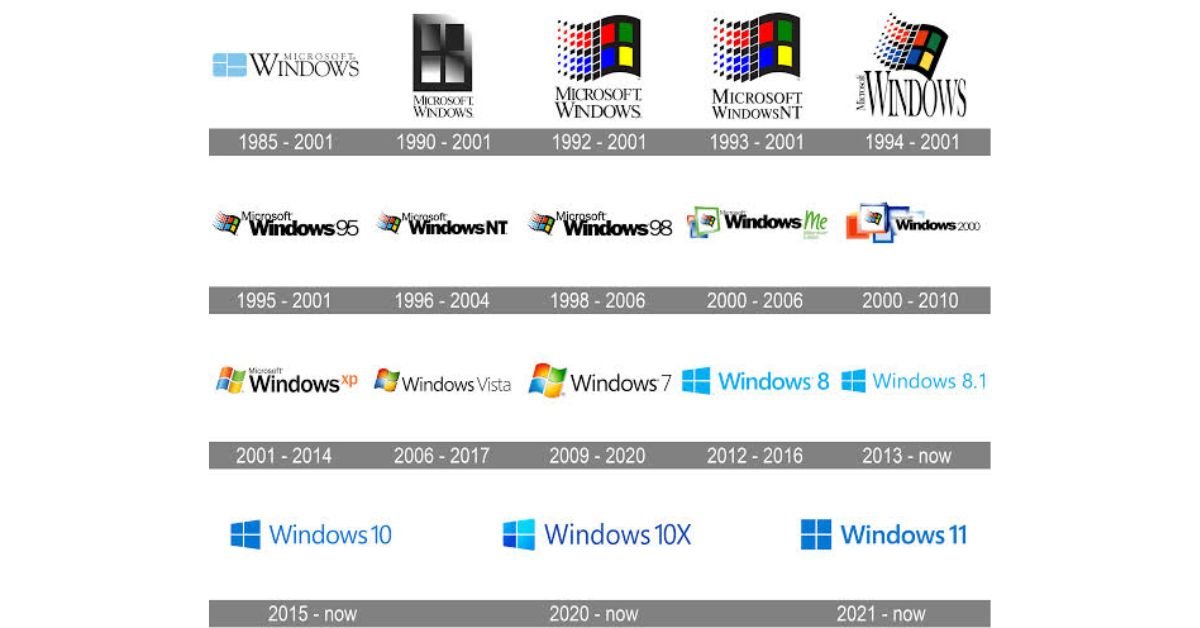
When Microsoft held its press event in San Francisco on September 30, 2014, tech journalists, enterprise IT managers, and consumers worldwide were expecting one clear announcement: the reveal of Windows 9. Following the naming convention established by Windows 7 and Windows 8, a “Windows 9” seemed like a mathematical certainty.
Instead, Terry Myerson, Microsoft’s then-Executive Vice President of Operating Systems, took the stage and dropped a bombshell: the next operating system would be called Windows 10.
The world skipped a beat and a number. Why did Microsoft skip Windows 9?
Was it a clever marketing ploy to distance the company from the widely disliked Windows 8? Was it a deep-seated technical issue buried in legacy software code? Or was it a combination of strategic positioning and tech superstitions?
Here is the breakdown of the technical, strategic, and historical factors that led to the death of Windows 9 before it ever hit store shelves.
1. The Legacy Code Glitch: The “Windows 9x” Problem
The most famous—and technically fascinating—explanation for skipping Windows 9 boils down to a lazy coding shortcut used by third-party software developers decades ago.
During the mid-to-late 1990s, desktop computing was dominated by two iconic consumer operating systems: Windows 95 and Windows 98. In developer jargon and system requirements, these two operating systems were collectively referred to as Windows 9x.
How Legacy Version Checks Broke
When software developers write applications, they often include code checks to determine which operating system the user is running. This ensures the program executes functions compatible with that specific OS.
Instead of writing distinct conditional checks for both operating systems, thousands of developers used a quick shorthand string search. The code frequently looked like this:
Java
// Example of legacy version-checking code
String osName = System.getProperty("os.name");

if (osName.startsWith("Windows 9")) {
    // Treat as Windows 95 or Windows 98
    // Execute legacy 16-bit/32-bit fallback routines
} else {
    // Treat as modern Windows NT-based OS (Windows NT, 2000, XP, etc.)
}
The Conflict with “Windows 9”
If Microsoft had named its 2015 operating system “Windows 9”, any legacy desktop program, enterprise utility, or Java applet containing that string search would inspect the new system, see that osName started with "Windows 9", and mistakenly assume it was running on an ancient Windows 95 or Windows 98 platform.
As a result, programs would either:
- Refuse to install, claiming the operating system was obsolete.
- Crash immediately upon launch due to missing 1990s-era system files.
- Fall back to degraded compatibility modes designed for 16-bit and early 32-bit hardware.
Shortly after the Windows 10 announcement, an alleged Microsoft software engineer shared on Reddit that early internal testing revealed thousands of third-party products contained this exact code flaw. Skipping straight to Windows 10 was the most pragmatic, cost-effective fix to prevent widespread enterprise software failures overnight.
2. Distance from the Windows 8 UI Debacle
Beyond background code, Microsoft had a massive branding and user-experience problem: Windows 8.
Released in 2012, Windows 8 attempted a radical redesign aimed at touchscreen tablets. Microsoft removed the beloved Start Menu, replacing it with a full-screen “Metro” tile interface. Mouse-and-keyboard desktop users felt alienated, and enterprise adoption tanked.
Windows Evolution Timeline
-----------------------------------------------------------------------
[Windows 7]   -->  Greatly Loved, Traditional Desktop
[Windows 8]   -->  Failed Interface, Removed Start Menu, Low Adoption
[Windows 8.1] -->  Minor Patch, Partial Rollback of Metro UI
[Windows 10]  -->  Major Leap, Return of Start Menu, Universal Platform
-----------------------------------------------------------------------
Microsoft needed a fresh start. Incrementing the name by just one number—moving from Windows 8.1 to Windows 9—implied a minor, evolutionary update. Jumping straight to Windows 10 signaled a revolutionary leap forward, effectively wiping the slate clean in the eyes of consumers and corporate buyers.
During the launch event, Terry Myerson highlighted this jump:
“Windows 10 carries Windows forward into a new way of doing things. It is not an incremental change, but a new Windows that will empower the next billion users.”
3. The Shift to “Windows as a Service” (WaaS)
Windows 10 was not designed to be just another desktop operating system; it marked a fundamental pivot in Microsoft’s underlying business model.
Prior to 2015, Microsoft released major standalone versions of Windows every three to four years (XP, Vista, 7, 8). With Windows 10, the company introduced the concept of Windows as a Service (WaaS).
Key Pillars of the One-Platform Shift
- Unified Codebase: Windows 10 was built to run across desktop PCs, laptops, tablets, Xbox One consoles, and HoloLens hardware.
- Rolling Updates: Rather than forcing users to buy a boxed copy of “Windows 11” or “Windows 12” every few years, Microsoft planned to update Windows 10 continuously via twice-yearly feature updates.
- The “Final Version” Myth: At the time, Microsoft developer evangelists famously referred to Windows 10 as “the last version of Windows”—a persistent, living platform (though Microsoft eventually pivoted again with Windows 11 in 2021).
To represent a unified ecosystem spanning across all hardware tiers, the double-digit “10” carried far more symbolic authority than “9”.
4. Alternate Theories and Cultural Nuances
While software legacy code and brand repositioning are the primary documented reasons, two other intriguing theories have circulated over the years:
The German Language Sound-Alike
Microsoft is a global brand that sells software in hundreds of countries. In the German language, the word for “no” is “Nein”, which is pronounced identically to the English number “Nine”.
Building a global marketing campaign around a product name that phonetically translates to “Windows No” across Central Europe was an obvious advertising hurdle Microsoft’s marketing teams preferred to avoid.
Japanese Cultural Superstitions
In Japan—a critical market for PC hardware and software sales—the number 9 is pronounced “Ku” (く), which shares its pronunciation with the word for pain, suffering, or hardship (苦).
Companies often avoid using the number 9 in product lines across Japanese tech and software sectors, similar to how Western real estate developers routinely skip the 13th floor in high-rise buildings.
Windows Version History: Internal Names vs. Consumer Names
To understand how flexible Microsoft is with its numbering schemes, consider that the consumer-facing product name rarely matches the operating system’s internal kernel build number.
| Marketing Name | Release Year | Internal Kernel Version | Key Technological Focus |
| Windows 95 | 1995 | Version 4.0 | Consumer 32-bit GUI, Start Menu |
| Windows 98 | 1998 | Version 4.1 | Web integration, USB support |
| Windows XP | 2001 | Version 5.1 | NT Kernel convergence for consumers |
| Windows Vista | 2007 | Version 6.0 | Modern security architecture (UAC) |
| Windows 7 | 2009 | Version 6.1 | Refinement, performance optimization |
| Windows 8 | 2012 | Version 6.2 | Touch-first “Metro” tablet interface |
| Windows 8.1 | 2013 | Version 6.3 | Partial Start button restoration |
| Windows 10 | 2015 | Version 10.0 | Unified OS, return of Start Menu |
| Windows 11 | 2021 | Version 10.0 | Refreshed UI, Android app subsystem |
As shown in the table, Windows 7 was actually Version 6.1 internally, and Windows 8 was Version 6.2. When Microsoft jumped to Windows 10, they also bumped the internal kernel version straight from 6.3 to 10.0, resetting the code metrics completely.
How Software Developers Check Windows Versions Today
Because lazy string matching caused the Windows 9 naming conflict in the first place, modern software development frameworks have abandoned string parsing entirely.
The Right Way vs. The Wrong Way
If you are developing applications today, here is how version management has evolved:
- The Old (Broken) Method: Searching raw system strings like
if (os.name.contains("Windows 9")). - The Modern Method: Querying specific API capabilities directly or using official version helper helper functions (e.g.,
IsWindows10OrGreater()in the Windows SDK).
Instead of asking the operating system “What is your name?”, modern applications ask “Can you run this specific feature?” This prevents operating system updates from breaking legacy enterprise tools.
Summary Checklist: Why Windows 9 Never Existed
- Legacy Code Safeguard: Prevented thousands of legacy programs from mistaking Windows 9 for Windows 95 or 98.
- Rebranding Away from Windows 8: Allowed Microsoft to distance itself from the failed tiled Metro interface.
- Symbol of a Major Leap: Highlighted the shift toward “Windows as a Service” and multi-device unification.
- Localization Awareness: Avoided unwanted phonetic translations in markets like Germany (“Nein”) and Japan (“Ku”).
Frequently Asked Questions (FAQs)
Was Windows 9 ever released as a developer build?
No. Microsoft never released an official developer preview, beta build, or retail software under the name “Windows 9.” Early build leaks prior to the 2014 announcement were listed internally under codenames like “Threshold” before being branded officially as Windows 10.
Did skipping Windows 9 actually save old programs from crashing?
Yes. Software auditing tools and open-source repositories (such as Java’s OpenJDK database) revealed thousands of legacy scripts and enterprise applications containing the if (version.startsWith("Windows 9")) string check. Skipping to Windows 10 directly prevented execution failures across corporate IT environments.
Why didn’t Microsoft just name it “Windows Nine” spelled out?
While spelling out “Nine” as text would have bypassed string-checking routines like Windows 9, it would have broken Microsoft’s established numeric branding convention (Windows 7, Windows 8). It was simpler and more impactful from a marketing perspective to jump straight to Windows 10.
Did Microsoft skip any other numbers?
Yes. Microsoft skipped Windows 4 (moving from Windows 3.1 to Windows 95, though Windows 95 carried internal version 4.0). In the mobile space, Microsoft also skipped Windows Phone 9, moving straight from Windows Phone 8.1 to Windows 10 Mobile.
Conclusion
The disappearance of Windows 9 wasn’t an oversight or a random whim by Microsoft executives. It was a calculated move driven by technical realities and strategic positioning. By skipping the number 9, Microsoft protected decades of legacy enterprise software from crashing due to lazy 1990s version-checking code while simultaneously giving its flagship product the clean slate it desperately needed after Windows 8.
- Microsoft Technical Documentation (for OS versioning and Win32 API details)
- Java OpenJDK Bug Database (for real-world instances of the
Windows 9string check bug)
