
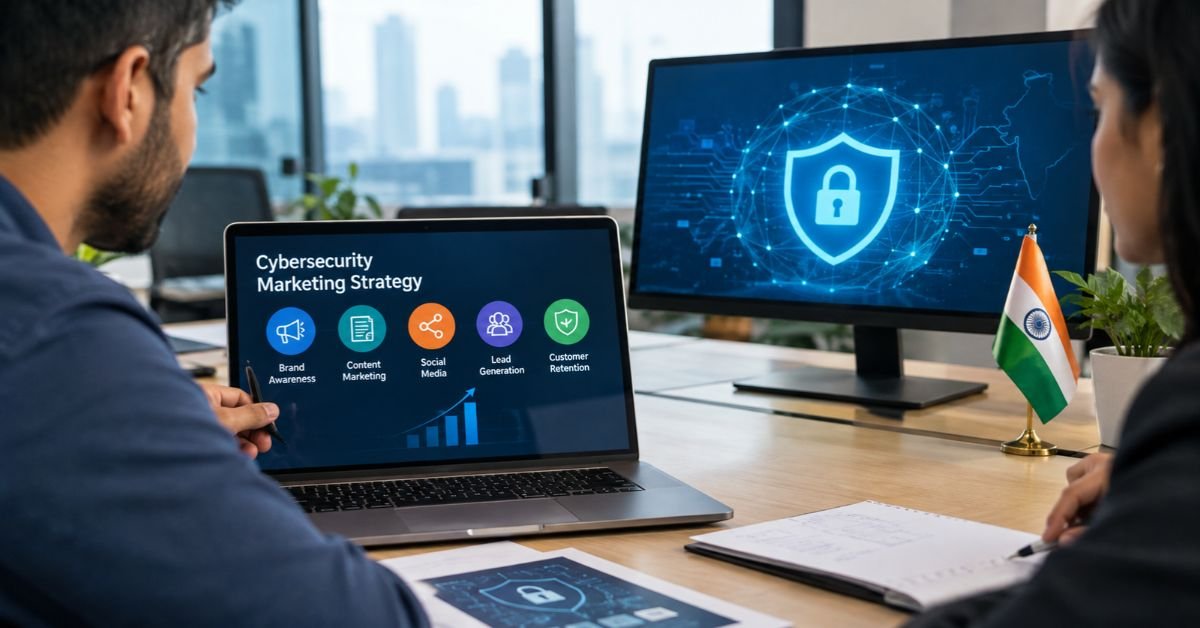
Selling security in India is a different job from selling it in the US or Europe. Buyers are cautious, purchasing runs through several layers of approval, and a compliance deadline will often move a deal faster than any product feature.
This guide covers what tends to work: how to pick your market, earn trust, choose channels, and spend your budget. It also covers the mistakes that quietly drain pipeline.
Why the Indian Market Behaves Differently
Start with trust. A CISO at a Mumbai bank has heard “complete protection” from dozens of vendors, so big claims with nothing behind them get ignored.
Regulation is the second factor, and it creates real urgency. A few rules matter most:
- CERT-In directions (2022): Organizations must report certain cyber incidents within six hours and keep logs for a set period.
- Digital Personal Data Protection Act, 2023: It sets obligations for how businesses collect and protect personal data, and its rules are phasing in.
- Sector frameworks: The RBI, SEBI, and IRDAI each publish cybersecurity requirements for banks, brokers, and insurers.
The buyers also vary a great deal. A global capability center in Bengaluru, a mid-sized manufacturer in Pune, and a state government department do not shop the same way, so one message rarely fits all three.
Finally, price matters, but so does risk. Buyers compare costs closely, yet they hesitate to back an unknown vendor when a breach could land on their own desk.
Choose Your Customer Before You Choose Your Channels
Many Indian security startups try to sell to anyone with a network. The result is thin pipeline and muddled messaging. Pick one or two segments and build around them.
| Segment | Typical Buyer | Main Trigger | Sales Cycle | Best Channel |
| BFSI (banks, NBFCs, fintech) | CISO, Head of IT Risk | RBI audits, incident reports | 6-12 months | Events, referrals, analyst relations |
| IT/ITES and GCCs | CISO, Security Architect | Client security questionnaires | 3-6 months | LinkedIn, technical content, communities |
| Manufacturing and OT | CIO, Plant IT Head | Ransomware, supply chain audits | 6-9 months | Partners, industry associations |
| Healthcare | CIO, Compliance Officer | DPDP readiness, patient data | 4-8 months | Webinars, consultants |
| SMBs | Owner, IT Manager | A recent scare, insurance requirements | 1-3 months | SEO, WhatsApp, resellers |
| Government/PSU | Department head, procurement | Tenders, mandates | 9-18 months | Empanelment, system integrators |
The cycle lengths above are rough ranges, not promises. Your own numbers will differ.
Before you write a single ad, talk to about ten recent customers. Ask what happened that made them start looking. That trigger is usually your strongest message.
Earn Credibility Before You Ask for Meetings
In security, credibility works like a product feature. Buyers want evidence before they want a demo.
Show your proof
Put the basics where buyers can find them:
- ISO 27001 and SOC 2 reports
- CERT-In empanelled auditor status, if you offer audit services
- A mapping of your product to RBI, SEBI, and DPDP requirements
- Third-party testing or analyst recognition
A dedicated Trust Center page works well for this. Include where customer data is stored, since Indian buyers frequently ask about data residency.
Write case studies buyers will believe
Large Indian enterprises often won’t let you use their name. That’s fine. An anonymized story still persuades if it’s specific, such as “a top-10 private bank cut phishing click rates from 18% to 4% in 90 days.” Cover the problem, how hard the rollout was, and what changed.
Anonymous case studies get through legal review faster and tend to be more candid. The downside is weaker social proof than a named logo. Offer private reference calls after the first meeting to make up the difference.
Publish Content Technical Readers Respect
Security buyers read a lot, and they spot filler quickly. The content that earns attention is usually one of these:
- Threat research on attacks hitting Indian organizations, such as UPI fraud, SIM-swap campaigns, and ransomware against mid-market firms
- Compliance guides that explain CERT-In and DPDP obligations in plain language, ideally with a checklist
- Technical write-ups covering detection logic, architecture choices, or incident postmortems
- Short commentary from founders on recent breaches
Each format pulls a different kind of lead:
| Format | Effort | Lead Quality | Best For |
| Threat research reports | High | Very high | Enterprise credibility |
| Compliance checklists | Low | High | Mid-market and regulated sectors |
| Webinars with practitioners | Medium | High | Nurturing existing leads |
| Short LinkedIn posts | Low | Medium | Awareness and founder brand |
| Product comparison pages | Medium | High | Late-stage buyers |
| Podcasts and video interviews | Medium | Medium | Authority building |
If your content gets traffic but few leads, check three things. Does the call to action match the article? Is the gated asset worth someone’s email address? And does the page load quickly on a mobile connection?
Get Search Working for You
Most buyers begin with a problem, not a vendor name. They search things like “how to respond to a ransomware attack” or “CERT-In six hour reporting” long before they compare products.
Plan keywords in three layers:
- Problem terms: how-to and compliance questions
- Solution terms: “managed detection and response India,” “VAPT services Bangalore”
- Comparison terms: “best SIEM for mid-size banks” or “[competitor] alternatives”
City names help when you sell services like VAPT, SOC-as-a-service, or compliance consulting, because buyers often want a local team.
A quick technical checklist:
- [ ] Pages load fast on 4G
- [ ] HTTPS everywhere, with no mixed-content warnings (a broken padlock on a security site is costly)
- [ ] Schema markup for FAQs, organization, and articles
- [ ] Topic clusters with a clear site structure
- [ ] Separate pages for each service and industry
- [ ] A Google Business Profile for each office
One common slip is publishing only product pages. Search engines and buyers both want the educational material around them.
Use LinkedIn the Way Security Leaders Do
LinkedIn is the strongest social channel for B2B security in India. CISOs and IT heads use it to follow peers and check out vendors.
What works is fairly simple. Founders and CTOs post weekly about real threats and what they learned. Analysts and researchers share their own work. Ads target titles like CISO, CIO, and Head of Information Security. And outreach opens with something useful, such as a relevant threat brief, rather than a demo request.
What doesn’t work: generic fear posts and “thrilled to announce” updates with nothing inside them. Keep direct messages short and tie them to something specific about the prospect’s industry or a recent regulatory change.
Don’t Skip Events and Communities
Offline presence still carries weight in India, especially for enterprise and government sales. Useful venues include Nasscom-DSCI events, Nullcon, and c0c0n, along with local OWASP and null chapters and bug bounty or CTF communities (which also help with hiring).
Closed-door CISO roundtables are worth trying too. A well-run dinner for 15 people can produce more qualified conversations than a big booth. Aim for depth over footfall.
If you apply for speaking slots, pitch real research instead of a product walkthrough. Those talks get accepted more often and are remembered longer.
Take Partners Seriously
Many Indian enterprise deals pass through system integrators, distributors, and value-added resellers. Ignoring them caps your reach.
| Model | Pros | Cons | Best For |
| Direct sales | Control over message and pricing | Slow and costly to scale | Enterprise, BFSI |
| Channel or reseller-led | Wide reach, local relationships | Shared margin, less brand control | SMB, government |
| MSSP partnerships | Recurring revenue, bundled delivery | Reliance on the partner’s roadmap | Mid-market |
| Cloud marketplace listings | Easier procurement, uses committed cloud spend | Crowded, with fees | Cloud-native products |
| Hybrid | Balanced coverage | Risk of channel conflict | Growth-stage vendors |
Partners sell more when you make it easy. Give them battle cards, demo environments, deal registration, and a clear margin structure. Train their engineers, not just their sales reps.
Run Paid Campaigns Carefully
Paid media can work if the audience is narrow and the offer matches intent.
On Google, bid on high-intent searches like VAPT, SOC services, and compliance audits, and stay away from broad terms that attract students and job seekers. On LinkedIn, target named company lists. Use retargeting to show case studies and trust badges to people who visited your pricing or demo pages.
Offers that tend to fit the Indian market include a free security posture assessment, a CERT-In or DPDP readiness checklist, a short proof of concept with defined success criteria, or a complimentary phishing simulation for a small group of users. Send every click to a landing page with one goal and a short form.
Go After Key Accounts with ABM
If your deal sizes are large, account-based marketing usually beats broad campaigns. The approach is straightforward:
- List 50 to 100 target accounts that match your ideal customer profile.
- Map the buying committee: CISO, CIO, CFO, procurement, risk, and legal.
- Research each account’s compliance exposure and recent news, then personalize outreach around it.
- Coordinate touches across email, LinkedIn, events, and direct mail.
- Measure engagement at the account level, not just clicks.
Enterprise purchases usually involve several stakeholders. Give your internal champion a one-page business case they can forward without rewriting.
Make Pricing and Messaging Easy to Trust
Hidden costs erode trust fast. Clear tiers, annual billing in INR, and phased rollout options help buyers feel in control.
Frame the value in business terms: less time spent preparing for audits, avoided regulatory penalties, lower incident response costs, and faster client onboarding when security questionnaires arrive. Pair any mention of risk with a realistic path to improvement. Messaging that only warns of doom wears out quickly.
A Starting Budget Framework
No split fits every company. Treat this as a starting point for a growth-stage vendor, then adjust.
| Activity | Suggested Share |
| Content and SEO | 25-30% |
| Events and community | 20-25% |
| Paid media (search and LinkedIn) | 15-20% |
| Partner enablement | 10-15% |
| ABM and sales support tools | 10-15% |
| Brand, PR, and analyst relations | 5-10% |
SMB-focused vendors will lean toward SEO and paid media. Enterprise-focused vendors will put more into events, ABM, and partners.
Measure What Matters
Skip vanity numbers and track outcomes:
- Ratio of marketing-qualified to sales-qualified leads
- Pipeline created and influenced by marketing
- Cost per qualified opportunity
- Sales cycle length by channel
- Win rate by source
- Organic traffic to high-intent pages
- Revenue sourced through partners
Review these monthly. If a channel hasn’t produced qualified conversations after two or three quarters of a fair test, cut it.
Mistakes That Cost You Pipeline
- Leaning only on fear. Buyers have heard it all before.
- Reusing US messaging unchanged. Regulations, languages, and procurement habits differ.
- Overlooking Tier-2 cities. Pune, Hyderabad, Chennai, Ahmedabad, and Jaipur are all worth a look.
- Overpromising. “100% protection” claims damage credibility.
- Following up slowly. Warm leads cool off quickly.
- Forgetting existing customers. Renewals and referrals drive much of long-term growth.
A 90-Day Starter Plan
Days 1-30: Lay the groundwork. Finalize your ideal customer profile and messaging, launch a Trust Center page, publish two anonymized case studies, and fix any technical SEO problems.
Days 31-60: Get visible. Publish a compliance guide and one piece of original research. Start weekly founder posts on LinkedIn, launch targeted Google and LinkedIn campaigns, and sign two channel partners.
Days 61-90: Build momentum. Host a CISO roundtable or webinar, begin ABM on a list of about 30 accounts, and review your funnel data to reallocate budget. Submit talks to upcoming conferences as well.
Final Thoughts
Good cybersecurity marketing in India rests on three things: proof, relevance, and patience. Back your claims with certifications and specific results. Speak to the regulatory pressure your buyer actually feels. Then stay consistent while long sales cycles play out.
Start with one segment, measure honestly, and widen your reach only once that first segment produces predictable pipeline.
Frequently Asked Questions
What is the 80/20 rule in cybersecurity?
The 80/20 rule is the Pareto principle applied to security: a small set of causes produces most of the risk. In practice, roughly 20% of your security controls, weaknesses, or user behaviors account for about 80% of your real exposure.
That’s why the basics matter more than expensive tools. A handful of habits stop most common attacks:
- Multi-factor authentication
- Prompt patching of known vulnerabilities
- Tested, offline backups
- Least-privilege access
- Phishing awareness training
Treat the 80/20 split as a planning guide, not a measured law. The exact ratio varies by organization, but the lesson holds: fix the fundamentals before buying advanced tools.
For marketers: This is also a strong message angle. Buyers respond well to “start with the few controls that matter most” because it feels achievable.
What are the 5 C’s of cybersecurity?
The most widely cited version lists Change, Compliance, Cost, Continuity, and Coverage.
| C | What It Means |
| Change | Systems, threats, and staff keep changing, so security must adapt with them |
| Compliance | Meeting legal and industry requirements (in India, CERT-In, DPDP Act, RBI, SEBI) |
| Cost | Balancing security spending against the cost of a breach |
| Continuity | Keeping the business running during and after an incident |
| Coverage | Protecting all assets, including cloud, endpoints, vendors, and remote users |
Note that this isn’t a single official standard. Some sources use different “C” lists, so say “commonly cited” if you publish it.
What are the 7 types of marketing strategies?
There’s no universal list, but these seven are the ones most often named:
- Content marketing: Blogs, reports, guides, and videos that educate buyers
- Search engine optimization (SEO): Earning organic traffic from Google
- Social media marketing: Building presence on platforms like LinkedIn
- Email marketing: Nurturing leads and customers directly
- Paid advertising (PPC): Search and social ads with measurable spend
- Influencer and affiliate marketing: Using trusted voices or partners to extend reach
- Event and referral marketing: Conferences, webinars, and word of mouth
Cybersecurity companies usually lean on content, SEO, LinkedIn, events, and partner referrals, because trust drives these purchases.
Can I make $200,000 a year in cybersecurity?
Yes, but it usually takes experience, specialization, or leadership. Entry-level roles rarely pay that much. Senior roles can, especially in the US.
Paths that commonly reach that range:
- Leadership: Security manager, director, or CISO
- Senior technical roles: Security architect, principal engineer, cloud security specialist
- High-demand specialties: Application security, threat research, red teaming, incident response
- Consulting or contracting: Independent work can pay well once you have a reputation
- Total compensation: At larger tech firms, bonuses and stock can push the total past $200,000
Pay depends heavily on location, industry, company size, and negotiating. For context, the US Bureau of Labor Statistics has put the median for information security analysts somewhere around $120,000 to $125,000 in recent years. Check the latest figures before quoting a number in print.
Certifications such as CISSP, OSCP, and cloud security credentials help, but experience and proven results carry more weight.
What is B2B marketing?
B2B (business-to-business) marketing is how one company promotes its products or services to other businesses, instead of to individual consumers.
The main differences from consumer marketing:
- Longer sales cycles, often months
- Several decision-makers in one purchase
- Logic over impulse, with ROI and risk weighing heavily
- Higher deal values and more relationship-building
A cybersecurity vendor selling to banks is a classic B2B example. Typical tactics include thought leadership content, LinkedIn outreach, webinars, account-based marketing, and partner programs.
What are 10 marketing strategies?
Here are ten that work well for B2B and cybersecurity companies:
- Content marketing: Original research, guides, and case studies
- SEO: Pages that match what buyers search for
- LinkedIn marketing: Founder posts, employee advocacy, and targeted ads
- Email nurturing: Useful sequences for leads who aren’t ready to buy
- Paid search and social ads: Narrow, high-intent campaigns
- Account-based marketing (ABM): Personalized outreach to a defined list of target accounts
- Webinars and virtual events: Practitioner-led sessions that build trust
- In-person events and roundtables: Conferences and closed-door CISO meetings
- Partner and channel marketing: Working with resellers, integrators, and MSSPs
- Customer marketing and referrals: Case studies, reviews, and renewals that fuel growth
You don’t need all ten at once. Pick the three or four that fit your buyer and budget, then add more as results come in.
RELATED ARTICLES:
Cyber Security Course in Hyderabad: Career-Focused Training & Placement Guarantee
Cybersecurity Journalist Profile Evaluation Criteria: A Practical 100-Point Scorecard
GRC in South Africa: Governance, Risk & Compliance
